Summer is officially over and that means the end of my powwow season because the kids are back in school. By fall I start thinking about repairing regalia, starting new beadwork, checking on hide tanners after the start of hunting season, and scouting for end of the season bargains on camping equipment and other powwow trail essentials. A powwow Mom’s (and Grandmother’s) work is never done.
I’ve watched competition dancers for the past 40 years and the questions that always form in my mind as I see yet another fantastically outfitted dancer are “Who made their regalia? What’s the inspiration for the design? How long did it take?” A complete outfit could take years to complete. Hides, furs, shells, beads, bones, feathers, horsehair, cones, fabric, fringe, ribbon and countless hours of meticulous work. Several years ago an announcer was commenting on champion traditional dancer Merle Eagle Speaker’s regalia that “a lot of love was put into it”, and I remembered that as I undertook the making of my children’s and others’ regalia. It truly is a labor of love.
In 1973 when I was 12, I started dancing and I made my own dress which I copied from my late grandmother’s tradecloth dress. My outfit was pulled together from various pieces and this was fine since I was just starting out. Today, there are the numerous dance styles’ regalia created with cutting edge designs developed by the dancers themselves or by their family, and modern materials and new techniques are contributing to intricate construction from custom-made patterns. I’ve also noticed an emergence of retro-inspired designs thanks to historic images that are readily available on the internet. As native people, we have always adapted to what was available and we drew upon our creativity to inspire new trends.
For many of us moms and grandmothers, making or acquiring regalia can be difficult. It can be very costly to buy and time-consuming to make. Fortunate are those who have inherited pieces from their family, and I’ve seen three and four generations wearing the same regalia looking as good as when it was first made. I recently shortened a buckskin dress for my adopted granddaughter and that 40-year-old dress was hand-sewn and without a worn or broken stitch anywhere!
Starting out with making kids’ regalia can help you develop and refine your creative skills. The smaller sizes are less intimidating, and you can use less costly materials because they will quickly outgrow it. You can use more expensive items like beadwork on pieces that they don’t outgrow such as hair adornments, bags, and other accessories.
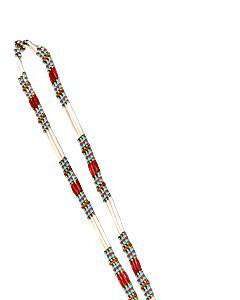
It’s worth the effort to learn to bead as the art will come in handy. Join up with an experienced beadworker and respectfully ask their advice; most are happy to help you and are flattered by your interest. Start with a small project like a medallion or a barrette with a simple design so you can get comfortable with the techniques, and work your way up to more challenging pieces.
Sewing skills are indispensable, whether by machine or hand. I’ve found that my high school home ec class gave me a good foundation for using patterns and understanding how to work with fabrics. Again, ask advice from experienced people. A cost-saving tip is to look at Goodwill or other thrift stores for costume or bridal apparel that you can make over into shirts, dresses, and the like. You can also buy ready-made shirts and pants and sew on ribbon, applique, and other decoration.
You can also trade with others so you can acquire the regalia pieces you need. I’ve traded my beadwork for hides, bells, bustles, roaches, and other items.
There are many good internet sites where you can learn from like the Craft Tutorials on PowWows.com, network with other artists, and be inspired by designs. Two of my favorite Facebook groups are One Stop Powwow Shop and Powwow Trade’n’ Shop.
And now it’s time to get back to my beading because next season will be here before I know it!
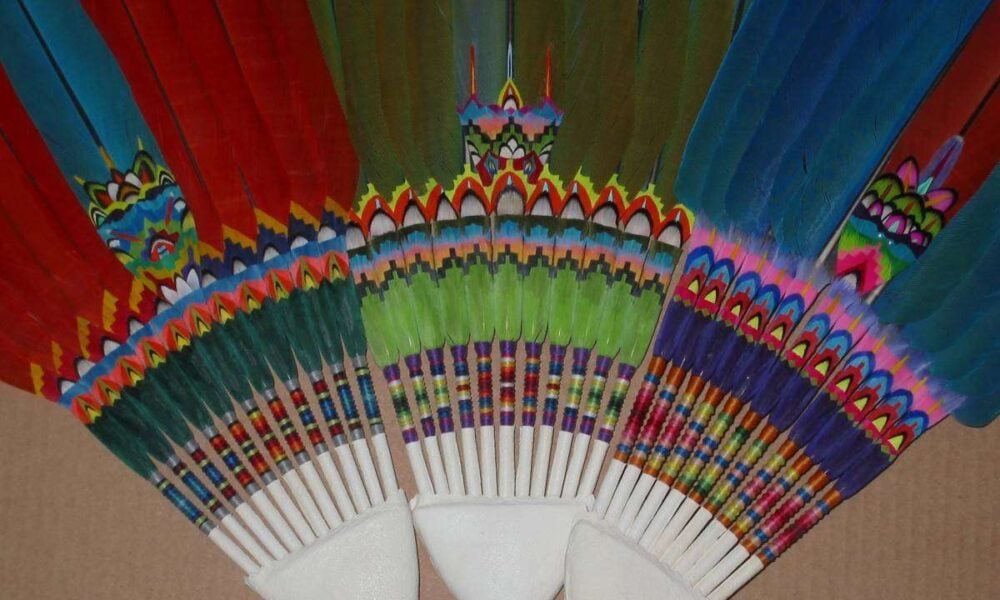
Featured photo of Joe Fergunson’s Fans.