Why Study a Native American Language?
For Native American people, tribal languages are important for keeping a strong sense of self-worth, community, identity, and for keeping their culture strong. For Native American students, knowing their tribal language well improves their self-confidence and helps (rather than hinders) the learning of non-Indian languages. For people who do not speak Indian languages, learning an Indian language is not necessary just to speak to Indian people. To some degree, most speak the dominant non-Indian language of the country they are now a part of, such as English in the United States, English and/or French in Canada, or Spanish in Mexico and Latin America. However, learning an Indian language remains important for gaining a deeper understanding and respect for Native American culture and heritage (especially the ceremonies, songs, and stories) and for sharing that respect with the Indian people.
It is important to note that a few Native American tribes do not wish to share their language with outsiders, as they regard their language and certain cultural features as private tribal property only. The ideal setting is the Indian home or tribal community setting where elders still talk with the children. Listening and speaking with fluent speakers is the best way to learn a Native language.
When first meeting fluent speakers— just learn to relax! It is possible that they may frequently use their language in your presence, but they are doing this because they enjoy their language and are proud of it. Forget the crazy idea that they are just talking about you; Chances are that they really have much more important things to do.
English to Native Language Translation
When conversing with them in English (or another European language) be aware that they might have difficulty in translating your speech— so please have patience! Also, it may be necessary to avoid idioms and complicated words and to converse slowly and clearly with pauses between sentences. (And unless people have hearing problems, speaking loudly will not help!)
Other options for learning include language CDs (and other materials), online resources, smartphone apps or classes which are now available for some Indian languages. Because CDs are bilingual, most CDs for languages within the U.S. and Canada are designed for English speakers and for tribes in most other countries of the Americas, most are designed for Spanish speakers. The material presented and the teaching methods used will vary from author to author, so carefully select the sets you like best, if a choice is available for the language you are studying. In addition, a number of schools and colleges today also offer Indian language courses, especially for the Indian languages in their local areas.
Whether through private study or through a class, learning an Indian language requires lots of study, practice, and commitment. Because these patterns are generally different from those found in European languages, a sentence must have its words rearranged to match the pattern of the desired Indian language before it can be translated.
Start with short sentences. By using either a CD or teacher, start memorizing short sentences using the different word patterns. Then try variations. In each sentence, substitute one new word at a time. Drill constantly and pay close attention in an effort to: start thinking in the Native language, build up your Native language vocabulary, compare and learn the word patterns, and gain familiarity with the verbs. Also, try recording your own sentences for more drill practice.
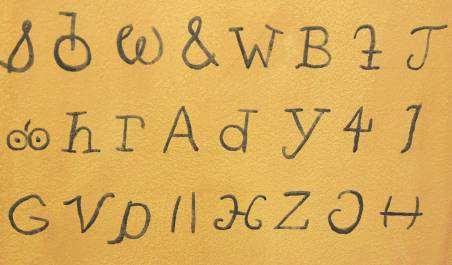
The written form of most Native languages is still quite new. Most have only been written for just 100-200 years. So, as yet, standardized spellings for words have generally not been agreed upon by all speakers. Keep this point in mind when using written
materials.
Native languages in active everyday use have a number of words of recent origin, like words for “airplane” and “television.” Generally, these words are compound words that have been made by stringing together two or more older words to identify the new thing or idea. The new words keep the language adapted to the modern Indian life.
Progress may be slow, but your efforts will be rewarded. After several years of hard work, you will become a fluent speaker! It took the missionary Eugene Buechel about 10 years to become fluent in the Lakota language. While a young man in the early 1900s, he spent as much time as possible among Lakota speakers in South Dakota. At the time, use of Lakota was common “on the street,” but he had few teaching aids available other than what he made for himself. Eventually, he compiled a Lakota-Sioux Dictionary. It was first published after his death in 1970.
Native American Language Resources
Smart Phone Apps
Websites
Books
- Reading and Writing the Lakota Language

- The Arapaho Language
- Practical Grammar of the Central Alaskan Yup'ik Eskimo Language
- Beginning Cherokee
- Lakhotiya Woglaka Po! – Speak Lakota! Level 1 Lakota Language Textbook (Lakhotiya Woglaka Po! – Speak Lakota!)


CDs
- Ojibwe, Comprehensive: Learn to Speak and Understand Ojibwe with Pimsleur Language Programs
- Ojibwe, Basic: Learn to Speak and Understand Ojibwe with Pimsleur Language Programs (Simon & Schuster's Pimsleur)
- Lakhotiya Woglaka Po! – Speak Lakota! Level 1 Audio CD
- Jicarilla Apache
- Ojibwe, Basic: Learn to Speak and Understand Ojibwe with Pimsleur Language Programs (Simon & Schuster's Pimsleur)
- Beginning Cherokee Language CD Set


Source: The Indian Way CD by Mark Thiel

Purchase the Indian Way CD from Noc Bay
Last Updated on December 13, 2023 by Paul G