According to the American Indian Religious Freedom Act, Native Americans and Indigenous Hawaiians are protected and able to practice their religion without prosecution.
Because of this act, the San Quentin Prison allows Hula classes for the inmates.

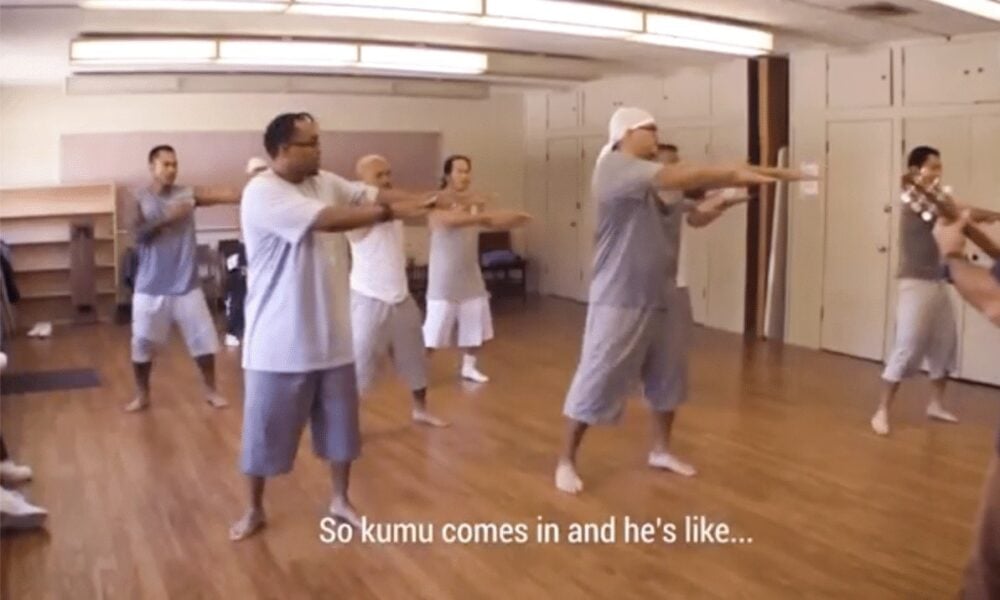
Hula for native Hawaiians is less a dance for tourists and more spiritual practice. A way of life. This practice has brought life changes to the inmates who participate in the prison. Watch the video below to see how this cultural practice of Hula has been enjoyed by the inmates at San Quentin Prison.
The prison officially classifies the hula program not as a dance class, but as a spiritual practice. It operates under the auspices of the American Indian Religious Freedom Act, which is a federal act that allows all Native Americans and Native Hawaiians the right to practice their customs freely—even in prison. As such, Makuakane is not a dance teacher, but a spiritual adviser.
“What I get from it is not at all what I expected,” said Bun “Pee Wee.” He's one of the dancers featured in the video, in class at San Quentin.
“I gained a whole culture,” he said. “It feels like home. It feels like I belong.”
Could Pow Wow dances have the same effect?