Native American communities are an essential part of the rich tapestry that makes up the United States.
With a whopping 574+ federally recognized tribes and 63 state-recognized ones, their presence has left an indelible mark on the nation’s history and culture. But their story is not just a historical relic; it’s a dynamic narrative of strength, diversity, and resilience.
By 2060, we can expect the Native American population to hit 10 million, underscoring their growing influence in the United States.
Now, around half of the Native American population currently lives on reservations, and there are about 326 of them, covering a whopping 88,000 square miles. These reservations come in all sizes, from the enormous Navajo Nation Reservation stretching through Arizona, New Mexico, and Utah, to the tiny 1.32-acre Pit River Tribe cemetery in California – the smallest reservation in the country. Each reservation tells a story, a mix of challenges and successes.
To dig deeper into where Native Americans are living and the unique issues they face, we’re diving into the top 10 states with the largest Native American populations, using data from the 2019 American Community Survey.
We’ll explore their cultural significance, the contributions they’ve made throughout history, and the modern challenges they’re tackling, as they strive for self-determination and prosperity. From the bustling streets of New York to the wide-open spaces of Arizona, these states are home to diverse Native American communities, each with its own incredible story and a promising future.
10. New York

Native American population: 73,560
Though New York was originally inhabited by the Laurentians, Abenaki, Mohicans, Eries and other tribes, its Native American population now comprises just 0.4 percent of the total population. Today, New York, one of the original 13 colonies, is home to members of the Cayuga, Seneca, St. Regis Mohawk, Shinnecock and Oneida tribes, among others.
Members of the Mohawk tribe, in particular, have gained a reputation as relentless ironworkers, helping erect the Empire State Building, Chrysler Building, and other major city landmarks. In the years following the 9/11 terrorist attacks, Mohawk workers helped rebuild the World Trade Center, now known as One World Trade Center or the Freedom Tower.
9. South Dakota

Native American population: 75,809
Almost 9 percent of South Dakota’s population is Native American. And only two other states have a higher proportion of Native Americans. The state is also home to the seventh-largest reservation in the U.S.—Pine Ridge Indian Reservation—which spans more than 3,200 square miles. However, life on the reservation is anything but grand. Life expectancy and per capita income are among the lowest in the country, and the school dropout rate hovers around a whopping 70 percent.
8. Washington

Native American population: 103,882
Washington is home to 29 federally recognized tribes, including its largest, Puyallup. Only four states have more Indian reservations and tribal areas. All across the state, tribal government businesses serve as a major catalyst for Washington’s economy—employing more than 37,000 people. Revenue from gaming and other tribal enterprises also funds essential services that benefit all Washingtonians. That includes health care, public safety, housing, natural resource programs, transportation and more.
7. Alaska
Native American population: 115,544
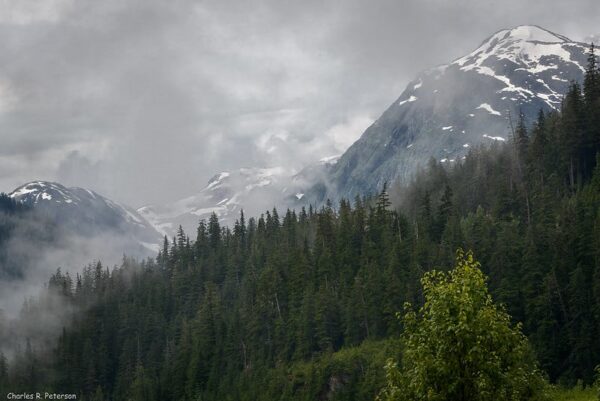
Though Alaska is home to nearly half of the country’s 574 federally recognized tribes, the Last Frontier is home to just one reservation. Nearly one in six Alaskans is Native American, the highest proportion of any U.S. state. The poverty rate among Alaska Natives, however, continues to soar. Almost one in four Alaska Natives lives below the poverty line. That’s about three times the poverty rate for white Alaskans.
6. North Carolina
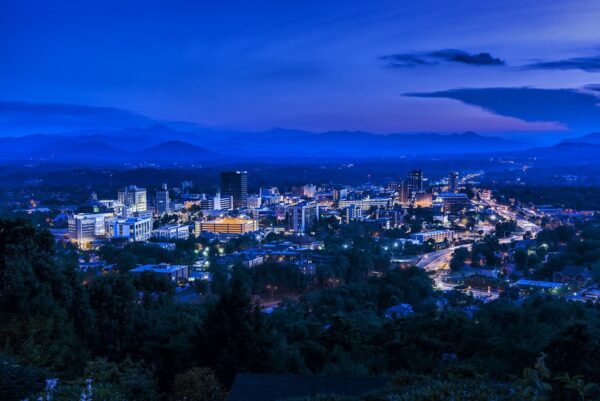
Native American population: 126,708
North Carolina, despite its noteworthy Native American population, is home to just one federally recognized tribe—the Eastern Band of Cherokee Indians. That tribe once oversaw a landmass of roughly 140,000 square miles, spanning eight states. Today, North Carolina boasts the largest Native American population east of the Mississippi.
5. Texas

Native American population: 144,993
Texas is home to three federally recognized tribes—the Alabama-Coushatta Tribe, Kickapoo Traditional Tribe, and the Ysleta del Sur Pueblo. The state-recognized tribes include the Lipan Apache Tribe and the Texas Band of Yaqui Indians, the former of which originally settled in the state in the 1600s.
Texas, however, was once home to hundreds of tribes. Starting in the 1950s, the U.S. government relocated more than 10,000 Native Americans to the Dallas-Fort Worth (DFW) area in an attempt to integrate and assimilate the Native population. They even promised lucrative jobs, health care, education, and more.
4. New Mexico
Native American population: 199,341
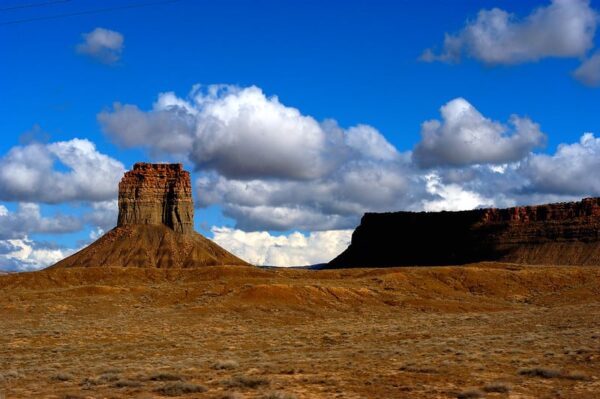
Native Americans comprise nearly one in 10 residents of New Mexico. Only one state has a higher proportion of Natives to its state population. In total, the state is home to 23 tribes, including the sprawling Navajo Nation, which falls partially in the northwestern region of New Mexico. Roughly a third of its 300,000 tribal members live in New Mexico.
3. Oklahoma

Native American population: 316,929
In July 2020, the U.S. Supreme Court ruled that nearly 4,700 square miles, or roughly half of Oklahoma, is Native American reservation land. The high-profile decision settled questions of whether the reservation still remained in existence after Oklahoma officially became a state. Despite having such a large proportion of Indian Country within its state boundaries, Oklahoma’s population is just 8 percent Native American. Its tribal members include the Five Civilized Tribes (the Cherokee, Choctaw, Chickasaw, Creek, and Seminole) and many other tribes. There are 38 federally recognized tribes in Oklahoma.
2. California

Native American population: 321,112
The country’s most populous state also has one of its largest Native populations. The origins of Indian gaming can also be traced back to the Golden State. In the 1950s, relocation efforts pushed Native Americans from reservations, in droves. Many headed west, even occupying a decommissioned federal prison on Alcatraz Island. Once they claimed it as Indian Country, several tribes began holding bingo night and other games there to generate revenue. Once it was determined that the U.S. Supreme Court couldn’t effectively regulate gaming on Native American land, the movement grew from there.
1. Arizona
Native American population: 332,273
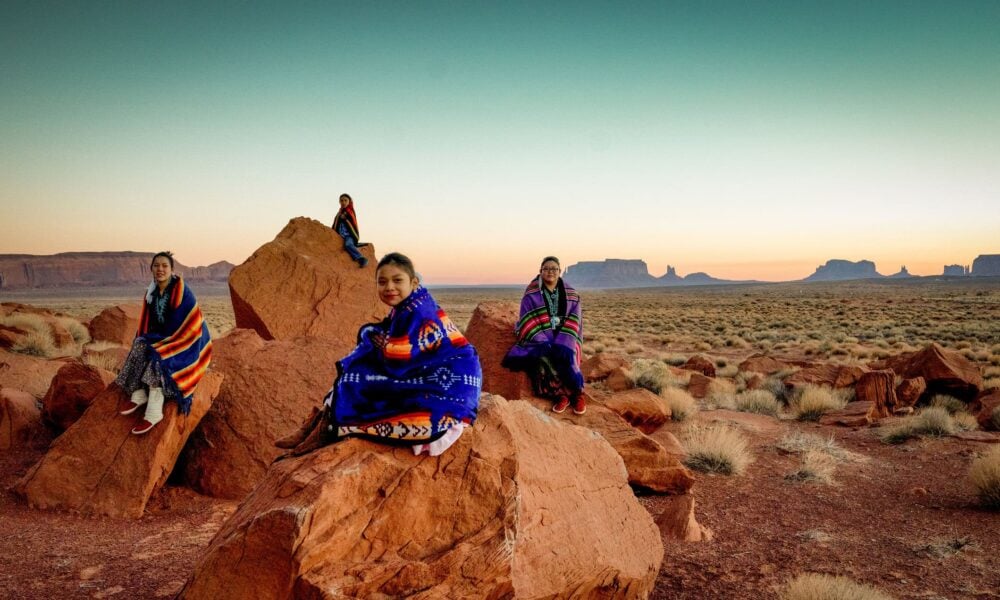
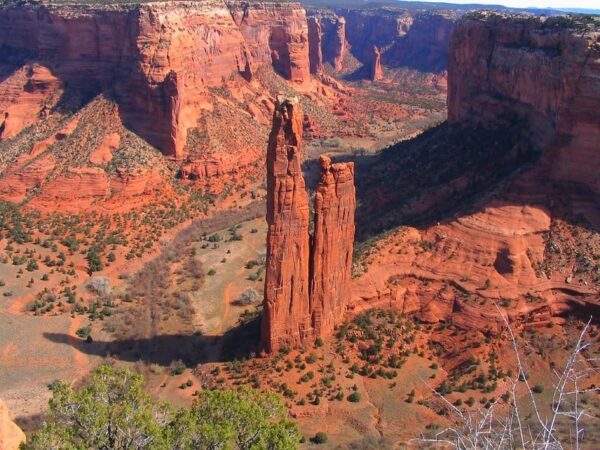
As far back as 12,000 years ago, indigenous cultures made their home in what is now modern-day Arizona. Today, the state boasts the country’s largest Native American population, with 21 federally recognized tribes. The Navajo Nation, the country’s largest, falls in three states—Utah, New Mexico, and Arizona. Nearly half of Navajo Nation lives in Arizona. In total, the tribal land spans a staggering 27,000 square miles.
On the other end of the spectrum, the Havasupai settlement—one of the smallest Native American nations in the U.S.—also falls in Arizona. Named for the water that flows from the Havasu Springs through Havasu Creek, Havasupai translates to “people of the blue-green waters.” The Havasupai reservation is the only place in the country where mail is literally still delivered by mule. The indigenous population has lived in their village on the outskirts of the Grand Canyon for more than a millennium. Today, the settlement is open to tourists.
Also noteworthy, Havasupai’s 450 tribal members only recently (2019) got set up with broadband internet.
Last Updated on February 18, 2026 by Paul G