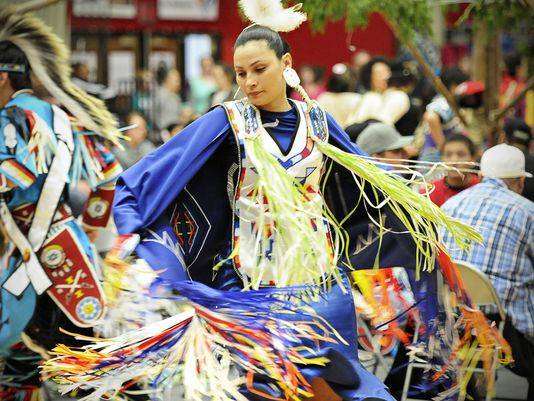
Why do you dance? For Crystal Stempson, a member of the Standing Rock Sioux Tribe, it’s a way to shake off everyday troubles and just be free.
“At the point when I go out and dance, I just forget about everything. I don’t think about what’s going on around me,” Stempson said. “I’m not really out there to dance for myself, to get in shape. I dance because people enjoy watching me dance.”
“It’s fun. It’s freeing. I feel free when I dance. I actually feel like myself when I’m dancing — I just feel like myself, I don’t feel like a student,” Stempson told the St. Cloud Times.
Photo: Jason Wachter, jwachter@stcloudtimes.com
Photo: Jason Wachter, jwachter@stcloudtimes.com
Crystal Stempson was recently the head woman dancer at the spring pow wow hosted by St. Cloud State University’s American Indian Center in Minnesota. You can read more about Stempson on SCTimes.
The Lumbee Tribe of North Carolina is one of the largest Native communities in the United States, with roughly 60,000 citizens centered in Robeson County and surrounding areas. The Lumbee have been recognized by the state of North Carolina since 1885, but for generations they have pushed for full federal recognition so their nation can….
Native American casinos are known for representing more than glitzy places to gamble. They’re engines of economic growth, symbols of tribal sovereignty, and hubs of cultural resilience. Growing into a multi-billion-dollar industry with more than 500 casinos nationwide, Native American casinos first began in 1979 as a simple high-stakes bingo hall. Since then, these establishments….
ABA’s Top 100 Events in North America is an annual compendium of the best events for group travel in the United States and Canada. Each spring, a committee of ABA-member motorcoach and tour operators selects the Top 100 Events for the subsequent year. Winners are chosen from hundreds of celebrations, festivals, fairs, commemorative events, and….
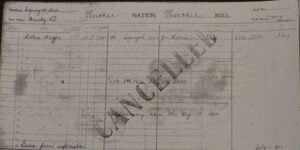
Today we call this the Dawes Rolls, although it encompasses the original Five Civilized Tribes of the South East (Cherokee, Chickasaw, Choctaw, Creek, and Seminole). This article is specifically about the Cherokee Roll. To describe this roll and purpose, first, we must do a bit of history and hopefully give the reader a better understanding….