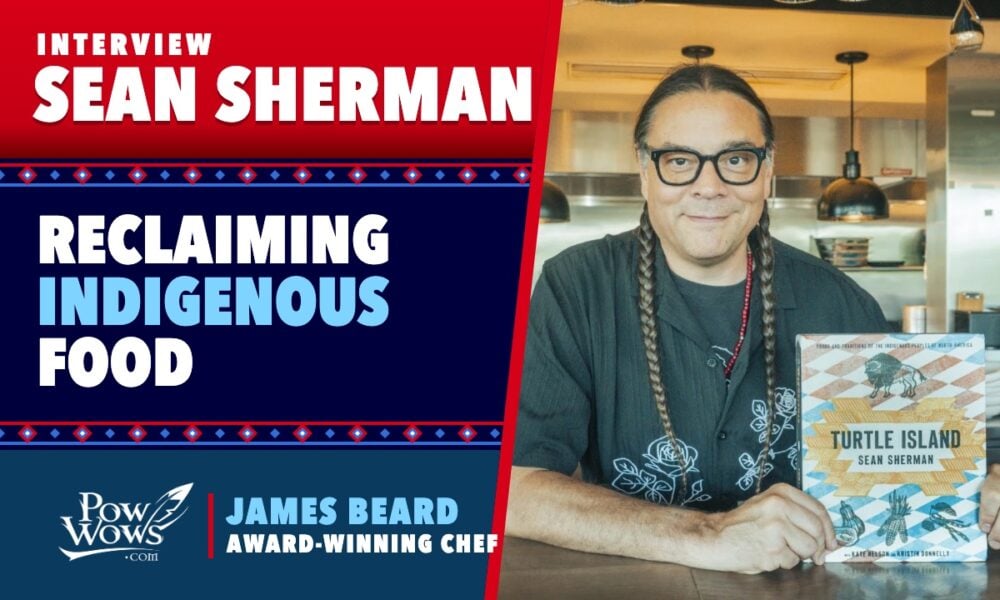
Why is it so hard to find a Native restaurant in America? That’s the question that changed Chef Sean Sherman’s life.
Sherman is Oglala Lakota and grew up on the Pine Ridge Reservation. He’s a James Beard Award-winning chef, the founder of The Sioux Chef, and the force behind the nonprofit NATIFS and the Indigenous Food Lab. On this episode of the Pow Wow Life Podcast, he sat down with Paul Gowder to talk about decolonizing your kitchen, what a powwow food stand of the future could look like, and why the next generation of chefs will say they’re “classically Indigenous trained.”
Watch the full interview:
🎁 Win an Indigenous food box! The Indigenous Food Lab Market sent us three of their new holiday boxes, and we’re giving two of them away during Thanksgiving week. Enter at powwows.com/spin.
Key takeaways
- Sean Sherman’s food philosophy removes ingredients brought over by European colonizers, such as wheat flour, cane sugar, dairy, beef, pork and chicken. It focuses on Native agriculture, wild plants and wild game.
- His nonprofit has identified more than 80 Indigenous food producers across the U.S., and you can buy from many of them at iflmarket.com.
- His original restaurant, Owamni, sent nearly $600,000 a year to Indigenous producers. The new, larger restaurant could reach $1.5 to $2 million a year.
- He thinks powwow food vendors have a huge opportunity to offer healthier, tribally sourced options alongside fry bread.
- Tribes decide what foods and recipes stay sacred. That choice is part of food sovereignty.
From Pine Ridge to the professional kitchen
Sherman started working in restaurants at 13, after his family moved from Pine Ridge to Spearfish, South Dakota. He never planned to be a chef.
“When I was young, we grew up poor,” he said. “Kitchens were just better cuz it was warm in there and you can have access to food.”
He bussed tables, served, prepped and worked the line. After college he moved to Minneapolis and became an executive chef before he turned 30, cooking Spanish, French, Japanese and farm-to-table food.
Then it hit him. Minneapolis had food from all over the world, “just nothing that represented the land that we’re on.”
Researching what his Lakota ancestors ate
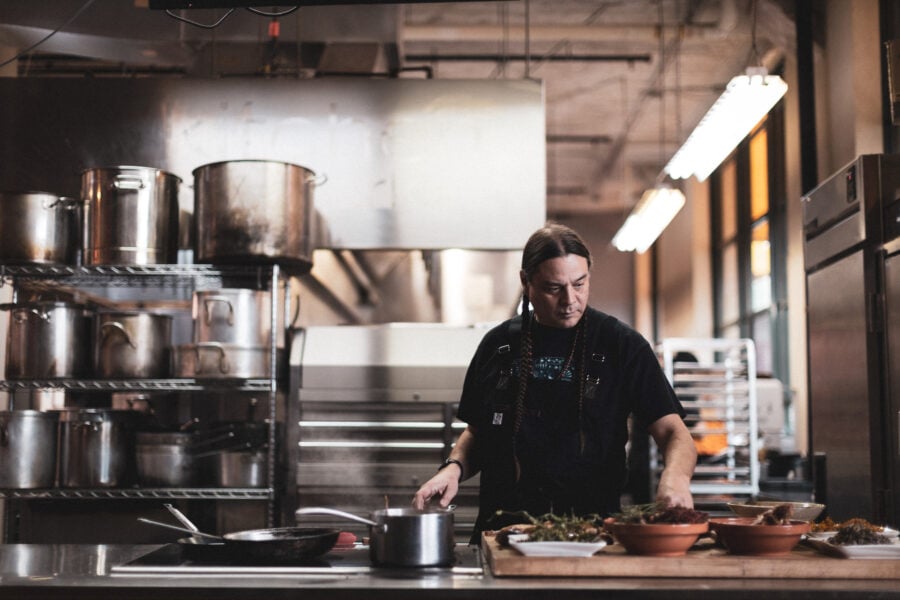
Sherman spent years researching his ancestors’ food: what they harvested, how they cooked, which parts of animals they used, and where they got basics like fat, salt and sugar. That work grew into research on other tribes and into a modern philosophy of Indigenous cooking.
The idea is simple. Cut out the ingredients European immigrants brought over, and cook with what was here first.
How to bring Indigenous ingredients into your own kitchen
Sherman says modern diets have barely touched the variety of foods in Indigenous diets. His latest cookbook, Turtle Island: Foods and Traditions of the Indigenous Peoples of North America, maps that variety region by region, from Mexico to Alaska.
To make these foods easier to buy, his nonprofit created the Indigenous Food Lab Market at iflmarket.com. Its new holiday boxes are a good place to start. Here’s what Sherman recommends trying first:
- Hand-harvested wild rice. True wild rice is harvested by canoe by tribes in northern Minnesota. It’s softer and cooks much faster than the dark, dense “wild rice” sold in most grocery stores.
- Tepary beans from Ramona Farms. They’re grown by an Akimel O’odham (Pima) family farm south of Phoenix. Tepary beans are drought-resistant, small and dense, and they hold their shape when you cook them.
- Maple syrup and maple sugar. Sherman’s kitchens don’t use cane sugar, so maple, maple sugar and agave do the sweetening.
And every dollar spent goes back to Native producers. “We’re just a nonprofit,” Sherman said. “We’re just trying to find ways to push food dollars towards those producers.”
Watch: Unboxing the Indigenous Food Lab Market holiday boxes
The Indigenous Food Lab Market sent PowWows.com its new holiday food boxes, and Paul opened them on camera. Each box is a sampler of Native-produced foods. Sherman mentioned ingredients like hand-harvested wild rice, tepary beans and maple syrup, and the boxes are an easy way to start cooking with Indigenous ingredients at home.
They also make a great holiday gift, and your purchase sends food dollars straight to Native farmers and producers. You can order them at iflmarket.com.
Want one for free? We’re giving two food boxes away during Thanksgiving week. Enter at powwows.com/spin.
What would a decolonized powwow food stand look like?
Powwows run on fry bread and Indian tacos, so Paul had to ask.
Sherman isn’t against fry bread. “There’s nothing wrong with that, but you can’t eat that like five times a day,” he said. His team has even developed gluten-free fry bread made with wild rice or blue corn that they haven’t released yet.
His advice for powwow vendors:
- Ask where your ingredients come from. Buy from tribes when you can, like wild rice from Minnesota tribes.
- Think outside the box. His old food truck sold griddled corn cakes topped with bison, braised turkey, or Three Sisters (corn, beans and squash).
- Offer some “energy food.” Give people a healthy choice, like Native tea instead of Kool-Aid.
Vendors who want bulk ingredients can order through the Indigenous Food Lab or ask to be connected with producers.
◆ YOU FOUND A BONUS CODE! ◆
2026 Explore Native Challenge
5718523
Enter this code on the giveaway page for extra chances to win Native-designed prizes from Eighth Generation.
Some foods stay sacred
Are there foods that should never go in a cookbook? Sherman says every tribe gets to decide that for itself.
“The tribes get to define their own food systems and that’s part of food sovereignty,” he said. Some recipes are ceremonial and don’t need to be shared, and what’s sacred to one nation may not be to another.
The Native kitchen 50 years from now
Sherman’s vision for the future includes:
- More Native farms growing heirloom seeds
- Regional flavors you won’t find in a grocery store, like cedar, balsam fir, pine, spruce and tamarack
- Tribally run food businesses in tourist spots like the Grand Canyon, Yellowstone and Yosemite
- Native foods on school and hospital menus through his new Meals for Native Institutions program
“Restaurants are a privilege. You need money to go to a restaurant,” he said. Getting Native foods into schools means kids grow up seeing them as normal.
His restaurant is now Indígena by Owamni, which moved into a larger space at the Guthrie Theater in Minneapolis. It went from 78 seats to more than 200. Native chefs from around the country come there to train, and NATIFS is expanding into Montana and Alaska.
Advice for young Native chefs
His first answer: “Don’t do it. Stick to school.” Then he laughed.
His real answer: there should be Native restaurants everywhere, and Owamni proved people want them. It won the James Beard Award for Best New Restaurant in 2022.
“We never have to be stuck in the past,” Sherman said. “We always have the opportunity to create.”
And yes, Paul asked whether The Bear is accurate. Sherman’s verdict: decent, but “it’s still fantasy.” His kitchens aren’t full of angry, yelling chefs.
Frequently asked questions
Who is Chef Sean Sherman? Sean Sherman is an Oglala Lakota chef from the Pine Ridge Reservation in South Dakota. He founded The Sioux Chef and the nonprofit NATIFS (North American Traditional Indigenous Food Systems), and he’s won multiple James Beard Awards.
What is decolonized or Indigenous cuisine? In Sherman’s approach, it means cooking without ingredients Europeans brought to North America (wheat flour, cane sugar, dairy, beef, pork and chicken). Instead it uses Native crops, wild plants and wild game.
Where can I buy Indigenous ingredients? The Indigenous Food Lab Market at iflmarket.com sells foods from Native producers across the U.S.
What is Sean Sherman’s restaurant called now? Owamni moved to the Guthrie Theater in Minneapolis in 2026 and is now called Indígena by Owamni.
Keep exploring
- 🎁 Enter our Thanksgiving week Indigenous food box giveaway: powwows.com/spin
- 📍 Find a powwow near you and get our weekly updates: powwows.com/powwowsnearme
- 🪶 Going to your first powwow? Read what to expect at your first pow wow
- 🛒 Shop Indigenous ingredients: iflmarket.com
- 📚 Learn more about NATIFS: natifs.org