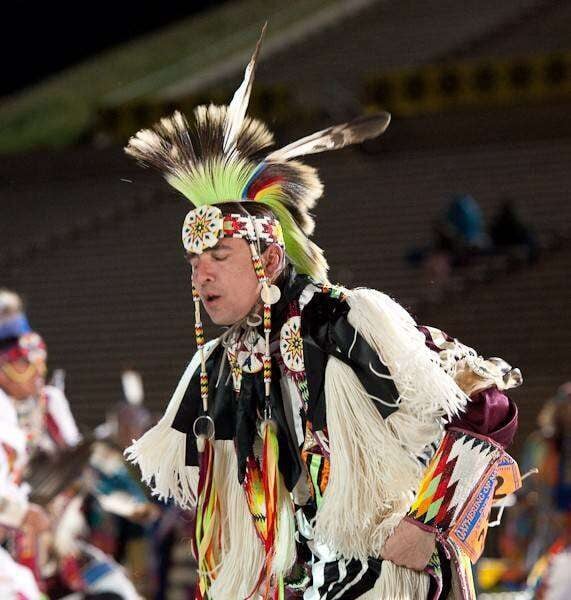
Though Grass Dancing was originally done as a Warrior Society Dance, it has evolved over the years. It has further evolved into a highly-competitive form of northern dancing.
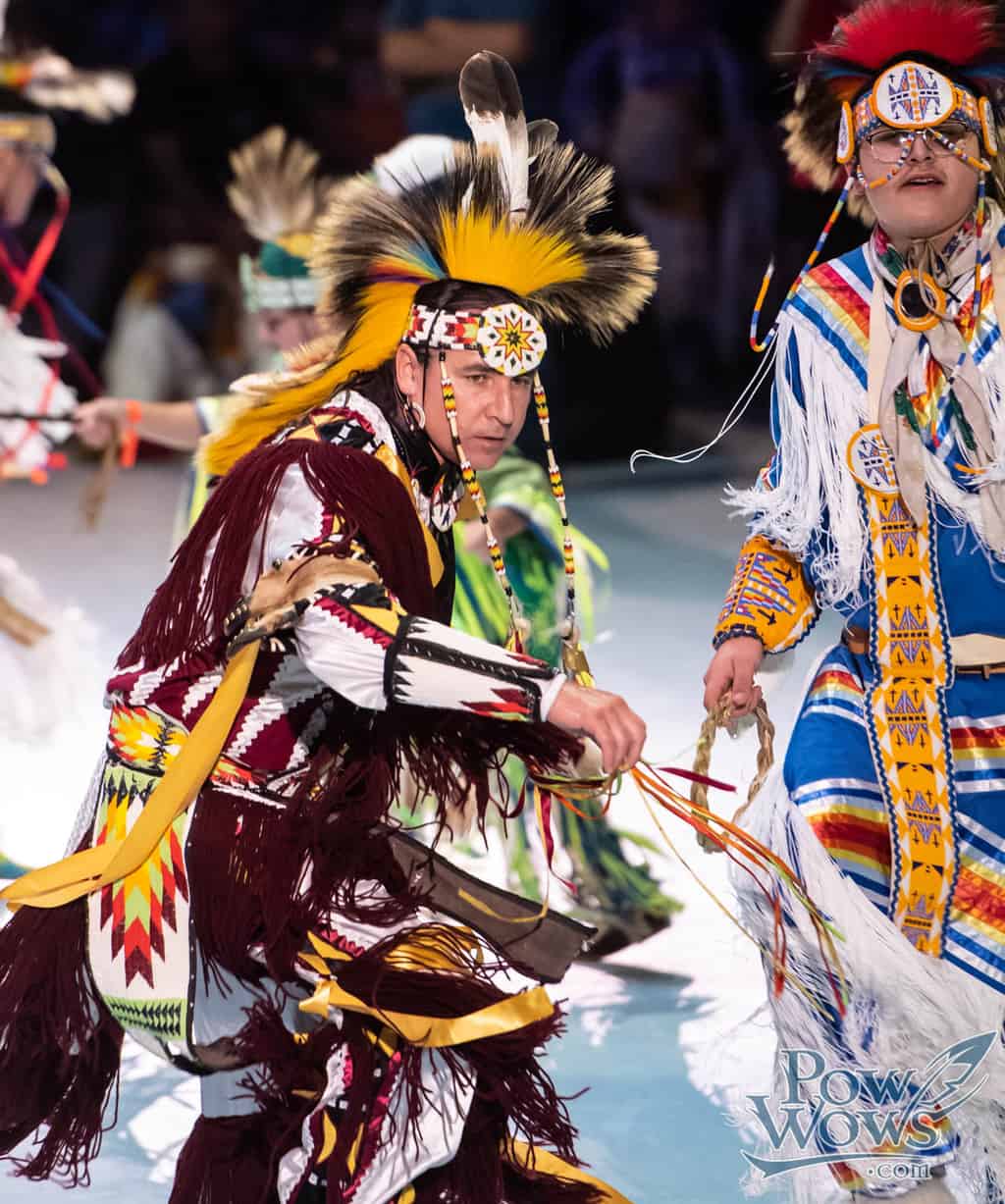
Grass Dancers always stands out by virtue of two things: his dancing style and his outfit. His dancing has been described often by these words:” gutsy, swinging, slick, old-time,” etc. His outfit stands out by virtue of the almost complete absence of feathers, for aside from the roach feather, there are no bustles of any kind to be seen. The outfit consists of a shirt and pants, with beaded or otherwise decorated belt and side tabs, armbands, cuffs, and front and back apron, with matched headband and moccasins, if available. Ribbons and fringe are the only mobile parts of his outfit, other than the roach feather. In other words, the outfit is made to conform to the style of dancing.

Some believe that grass dancing came from young boys tying grass on their outfits. Before a dance could be held on the prairie the grass had to be stomped down. This is where many of the movements are believed to come from. Afterward, the dancers would tie the grass to their outfits. Many believe that the Omaha tribe originated the dance in their warrior societies.
Northern Great Plains Native American Grass Dancing Outfits
The name “Grass Dancing” comes from the custom of some tribes wearing braided grass in their belts.
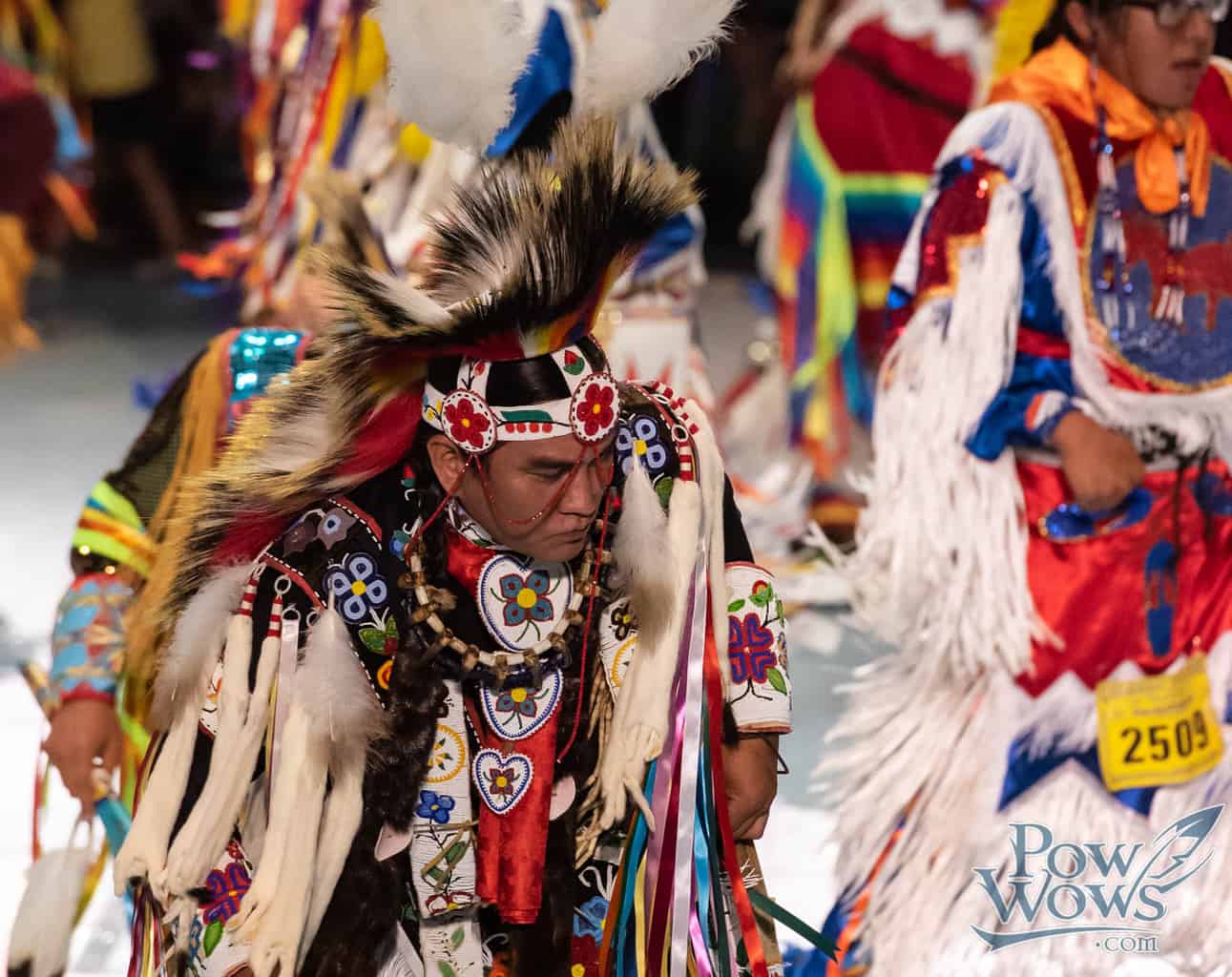
The unique parts of the northern outfit are the shirt, trousers, and aprons, to which yarn fringe, sequins, and beaded rosettes other designs are attached. The outfit makers are fond of using playing card designs: hearts, clubs, spades, and diamonds. Hearts and rosettes ar e the most common. White fringe is preferred; however, gold, silver, and other light color fringe is also used in grass dancing.

Bells are worn around the ankle. Mostly plains hard-sole or woodland soft-sole moccasins. The apron is probably the, most striking part.
The front apron (or breech cloth) is decorated with beadwork, ribbon work, or a combination. The back apron has several colors of ribbons sewn in V-shapes. The ends hang loose for two to three feet. Ribbons also hand from the center. Belts are usually fully beaded. A “holster” or drop is worn on each side of the belt and reaches to shin level.
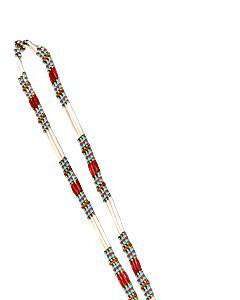
They are fully or partially beaded. Ideally, all of the beadwork matches. It may be floral, geometric, a combination of both. Characteristic of the outfit are the large, fully beaded cuffs or gauntlets, arm bands, chokers, occasional loop necklaces or breastplates, beaded collars and ties, and colorful scarves. The real prize is the beaded harness which reaches from the shoulders to below the knees. The two strips are usually connected by a large piece of beadwork which forms and hence the name “H-harness.” Tassels or ribbons hang from the end of the harness.
The perfect headdress is the porcupine hair roach which is attached to a head harness. It is decorated with rosettes, hearts, etc., and long drop stripped with fluffs, or drops made from chains or cafe curtain rings.
Grass dancing participants carry fans, Eagle-bone or carved ‘screen” whistles (some are made from metal tubes), mirror boards, and dance hoops of various sizes.
Native American Grass Dancing Photos

Last Updated on February 27, 2024 by Paul G