There are many disenfranchised Native Americans who can’t meet tribal membership requirements. In addition, there are many people who have some degree of Native ancestry but do not meet the requirements for tribal enrollment.
Tribal membership is an important formal recognition of personal heritage. For many, it’s a matter of identity, community, and acceptance.
Likewise, becoming a recognized tribe member opens the door to tribal and government support.
Health care, housing, education, and food, among others, all become available. Such assistance is a lifeline for many families around the US.
Unfortunately, the process of gaining tribe membership can be far from straightforward. A host of obstacles frequently present themselves.
Are you wondering why tribal membership is such a tough process for Native Americans?
Keep reading to discover the predominating obstacles standing in the way.
Why Tribal Membership is Such a Tough Process for Native Americans
1. No Blanket Rules
One of the primary obstacles to tribe membership is a lack of universal rules and requirements.
There’s no one set of rules for gaining membership.
Instead, differences can be found at federal, state, and tribal levels. For example, some tribes are recognized at a state, but not a federal level. Some tribes require you to meet for an interview with the tribe leader. Others don’t.
The process and requirements for one tribe may be entirely different from another.
For example, the Walker River Paiute tribe requires at least one-half blood quantum. The Navajo only ask for one-fourth (learn more about blood quantum definition).
This absence of a standardized process serves to complicate matters.
It’s essential to work out your requirements for your particular tribe. What worked for a friend may not work for you. Making mistakes along the way is a sure-fire means of prolonging the process.
As an aside, depending on your situation, you may be eligible to apply to multiple tribes. At that point, a decision must be made as to the right one for you.
Related Info – Step By Step Guide To Tracing Your Family History
2. Different Blood Quantum Requirements
Blood quantum is often a deciding factor when it comes to tribal regulations.
It’s also a hotly contested issue amongst tribal communities. Defining someone’s identity by the percentage of blood contains a host of moral and ethical implications. That’s especially true when it can open or close the door to tribal recognition.
Regardless, for now, blood quantum remains a relevant metric in determining tribal membership.
You might be wondering what it means.
Well, the term refers to the proportion of someone’s genetic makeup that’s native by blood. The higher the figure, the more native blood running through someone’s veins.
It’s calculated by looking backward at native family connections. For example, having one full-blooded grandparent would make you ¼ Native American.
Blood quantum is one of the primary differences between tribal entry requirements.
The level of relation to a tribe is key. The majority of tribes stipulate at least ¼ blood quantum to be eligible. Others, like the Eastern Band of Cherokee Indians, have a 1/16 quantum requirement.
Some require 1/8 and 1/32. Others have no minimum. Instead, it’s based on personal identification and ancestral links to the tribe.
Read more about calculating Blood Quantum.

3. Certificate of Degree of Indian Blood
Native Americans also require a certificate from the Bureau of Indian Affairs (BIA).
Known as a Certificate of Degree of Indian Blood (often known as a CDIB), it’s a card that details your degree of blood quantum. Only with this in hand can you apply for entry to one of the federally recognized tribes.
The BIA is the government body that allocates the card. However, the decision rests with the tribe itself. Each one will have its particular ordinances that stipulate its requirements.
Again, the CDIB is another contentious issue in the debate on Native identity. No other ethnic community in the US is required to have a certificate that proves their lineage.
Many argue the discriminatory nature of the practice. That’s especially true given the role of this certificate in accessing a tribe and particular benefits.
4. Prove Direct Lineage
To become a tribe member you need to prove your connection to it.
That means going back through history to find evidence of your heritage.
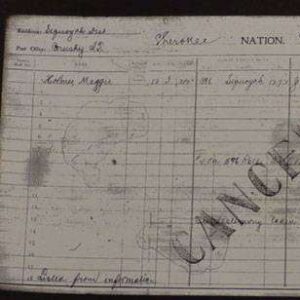
Family tribal records are often the best way to do this. From birth certificates, marriage and death certificates, old school records…They often hold the proof you need.
Internet research can also play a role. Many websites and databases provide extensive genealogical records. Accessing these can be a straightforward means of proving a connection to a tribe.
Many people wonder if a DNA test would suffice.
The answer to the query is generally ‘no’. On rare occasions, the results of these tests may be permitted as evidence. However, more often, someone must show their connection through direct records.
5. Ongoing Contact with the Tribe
Here’s another quick obstacle that can pose a problem:
Another requirement many tribes have is continued contact with it.
Can you demonstrate a history of contact with a tribe? If so, then you stand a better chance of being allowed access to it. After all, ongoing contact shows an affinity and genuine interest that cultivates trust.
Imagine a long-lost relative of yours getting in touch out of nowhere. What would your response be if they asked to be part of your family?
Chances are you wouldn’t accept. After all, you don’t know them, nor understand their intentions.
But imagine they’d kept a steady stream of communications throughout your life. Their request to become a larger part of it may be met with greater interest.
It’s a similar situation regarding the utility of having continued contact with the tribe.
Lack of communication with a tribe doesn’t necessarily prevent membership. Similarly, not all tribes require it. However, it will be an undeniable advantage if you’ve kept in contact with them.
Be sure to detail current or historic contact in your application.
6. Length of the Process
One outcome of each aforementioned obstacle?
Time.
These days, we’re used to applying for something online and being improved in moments. Online courses, group memberships, magazine subscriptions, and so on allow near-instant access.
That, as you may have already guessed, isn’t the case with tribal membership. Every step along the way takes time and effort.
As we’ve seen, you must acquire the necessary information to prove lineage. You have to contact relatives, conduct online research, and find the forms. Then you must apply for membership, complete the forms, and (sometimes) meet with tribal leaders.
Time is the primary factor. Becoming a formally recognized tribe member is no simple feat.
Final Thoughts on Tribal Membership
There you have it: exactly why tribal membership can be a difficult process.
The number of Native Americans in the US pales in comparison to the overall population. Identity and belonging to a tribe become intensely personal and precious.
However, as we’ve seen, the route toward membership isn’t easy. Hopefully, this post has demonstrated exactly why that’s the case.
Looking for more information on Native American genealogy? Click here for all of our articles on the subject!
Last Updated on July 29, 2024 by Paul G