Games of chance have always been part of most cultures, and Native communities are no exception. Long before casinos or bingo halls, Indigenous people across North America played games that mixed luck, skill, and community spirit.
These games weren’t just for fun. They were a way to bring people together, celebrate, and sometimes even settle disputes or redistribute resources. Wagers could be food, handmade goods, or other meaningful items, and in many cases, the act of playing was as important as the prize itself.
Across Native nations, games weren’t just a way to pass the time. Many were tied to ceremony, teaching, and community life. Some were played to bring rain or good harvests, to heal, or to show physical readiness, while others helped kids build skills they needed for adulthood. You also see a clear split between games of chance and games of skill, and both kinds could show up at social gatherings or seasonal events.
Wagering showed up in lots of places, but the “prize” wasn’t always money. People might stake food, handmade goods, or counting sticks, and the play itself helped build trust and strengthen bonds. Common chance games included dice or bowl-style games and guessing games. For example, some regions used marked plum pits tossed in a bowl with points scored by the landing combinations.
Guessing games were especially widespread. In hand-game traditions like lahal, one side hides marked “bones” while the other side tries to read the hider and guess correctly, all while teammates drum and sing to distract the guessers. The aim is to win all the opponent’s sticks, which makes it competitive, social, and loud in the best way. Variations of the moccasin game follow a similar pattern, with an object hidden in one of several moccasins and music used to mask cues. Many communities still host tournaments today, often alongside pow wows.
If you enjoy exploring modern gaming options, you can find no-deposit bonus codes and game reviews at automatenspielex.com/online-casino-bonus/bonus-codes. Use it to learn how different games work and decide what fits your style.
Just as today’s online choices keep players entertained, traditional Native games blended chance, skill, and cultural meaning. The settings and stakes have changed over time, but that mix of community, competition, and anticipation will feel familiar to anyone who loves games.
So while today’s casinos and online platforms feel very modern, the core ideas behind risk, reward, reading your opponent, and playing for community connection are old friends in Indian Country.
Handgame or Stickgame
A team hides marked “bones” in their hands while the other team tries to guess where they are. Drumming, singing, and lots of friendly taunting make it a lively scene. Teams trade counting sticks as points. You will find versions of this across many Nations.
Lahal / Sla-hal
A Northwest Coast version of the handgame. Two teams face off with pairs of bones, counting sticks, and a pointer. The goal is to win all the opponent’s sticks by outguessing the hiders. Songs are part of the game and help distract the guessers.
Potawatomi Hand Game
In this Great Lakes style, a captain selects two hiders and a picker each round. The picker points with a decorated stick to call the guesses. Scoring usually requires choosing both correct hands, which keeps the tension high.
Moccasin Game
An object is hidden under one of several moccasins. Opponents have to pick the right one while singers drum and try to throw off their read. Many communities still run summer tournaments alongside pow wows.
Plum-Stone Dice / Bowl Game (Hubbub, Mamantuhwin)
Players toss carved seeds or pits in a bowl. Points are scored based on how the marked sides land. Rules and scoring vary by region, but the core idea is simple, fast, and perfect for social play.
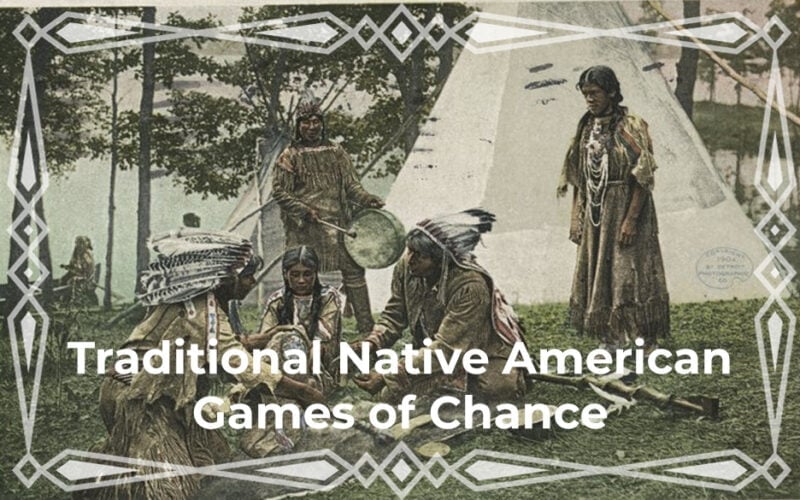
Feature image provided by Wikipedia.