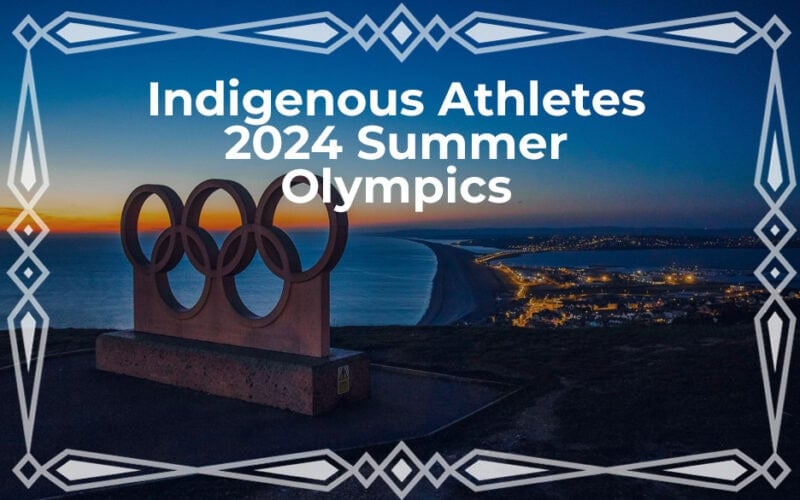
The 2024 Summer Olympics are in full swing in Paris, France. The opening ceremonies on July 26th introduced the world to this year’s athletes, shining a spotlight on a diverse array of athletes from around the globe. Among them, North American athletes with Indigenous heritage are ready to show off their exceptional talents. These athletes symbolize resilience, pride, and the ongoing fight for recognition and respect within the global sporting community.
Indigenous people across North America have a long history of athleticism, as traditional games and sports play a central role in their culture where physical prowess is celebrated. Today, Indigenous athletes face a unique challenge as they navigate the competitive world of international sports while trying to preserve and honor their heritage.
One notable example is Indigenous American and Canadian athletes who are set to compete in the 2024 Olympics. These athletes are not just representing their countries but also embodying the rich cultural legacies of their ancestors.
The Indigenous athletes who are going for the gold in the 2024 Summer Olympics comprise more than 50 athletes. They represent Indigenous people and are proud to be athletes included as a part of Team USA in Paris. The U.S. will be represented by three Native Hawaiians in surfing, skateboarding, and volleyball who have all competed at the prior 2020 Tokyo Olympics; Carissa Kainani Moore is a Native Hawaiian and American surfer, Micah Makanamaikalani Christenson an American and Native Hawaiian professional volleyball player who plays as a setter for Zenit Kazan and the U.S. national team, and Heimana Reynolds, a Native Hawaiian who has competed in men’s park events at several World Skate Championships.
Among the Indigenous athletes representing Canada is Justina Di Stasio. A citizen of the Norway House Cree Nation of Manitoba and originally from Coquitlam, DiStasio is an impressive wrestler in her 76-kilogram (168-pound) weight class. Swimmer Apollo Hess of the Blood Tribe will also be representing Canada as a member of the Paris 2024 Olympic team. Hess placed second in the men’s 100-meter breaststroke at the 2024 Olympic Swimming Trials.
Diver Margo Erlam, of Métis, is another proud Canadian with Indigenous heritage joining the Olympic team. She was named to Canada’s 2022 Commonwealth Games Team and won a bronze medal in the synchronized 3-meter springboard event, before qualifying for the team. A member of the Tseshaht First Nation on Vancouver Island, Shalaya Valenzuela represents Canada and her heritage as an outstanding member of the Rugby Sevens team, along with Flynn McCarthy, on the Indoor Volleyball team for Team Canada.
The impact of these athletes extends well beyond the Olympic games. Their presence at the Olympics challenges stereotypes and fosters a broader understanding of Indigenous cultures. The importance of acknowledging and respecting the diverse backgrounds of all athletes is highlighted by their presence.. For many Indigenous youth, seeing role models who share their heritage can be a powerful motivator, encouraging them to pursue their dreams both in sports and beyond.
North American athletes with Indigenous heritage participating in the 2024 Summer Olympics are a significant representation of athletic excellence. These athletes are champions of cultural preservation, advocates for Indigenous rights, and sources of inspiration for future generations. Their participation speaks to the rich history and continuing contributions of Indigenous peoples to the sports world and beyond.