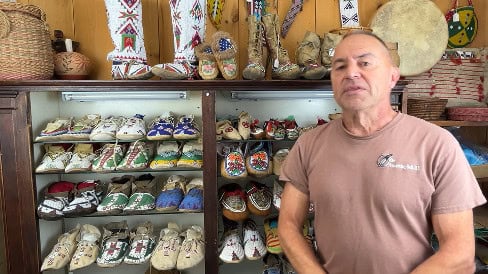
In a recent video, Chris from The Wandering Bull shared a fascinating look at moccasins from across Indian Country. Surrounded by shelves of beautifully made footwear, he walked through the differences in construction, beadwork, regional styles, and historical techniques that make each pair unique.
For anyone who wants to learn more about moccasins — especially if you’re interested in making a pair yourself — his explanations offer an incredible glimpse into the skill and artistry Native women have brought to moccasin-making for generations.
Visit www.WanderingBull.com to find everything you need!
Use Code – PWMOCS – Save 10%
The Art and Skill Behind Moccasins
Chris opens by honoring the women who traditionally created moccasins. They did all the beadwork, all the sewing, and all the pattern making, often using:
-
Rawhide soles
-
Brain-tanned deer or moose hide
-
Natural sinew
-
No modern lighting or tools
Despite the difficulty, these makers created footwear that was not only functional but stunning in detail. Many pairs in the collection show how precise, innovative, and masterful these artists truly were.
Northern Plains and Crow Styles
Chris begins with several northern examples:
-
High-cuff moccasins with added leather panels, brilliant beadwork, and rawhide soles.
-
Classic Crow-influenced designs marked by their high tops and distinctive heel construction.
-
Northern Plains moccasins featuring the familiar V-shaped tongue and both soft-sole and hard-sole versions.
These moccasins often include white center red beads, common Plains colors, and strong geometric designs.
Southern Plains Designs
A southern example shows:
-
Side fringe
-
A V-shaped vamp
-
Edge-beaded cuffs
This style is still seen in southern regions today and remains one of the most recognizable moccasin shapes.
Eastern Woodlands and Great Lakes Styles
Chris highlights several pairs from the Northeast and Great Lakes regions:
-
Haudenosaunee (Iroquois) raised beadwork, often made for the tourist trade around 1890–1910.
These feature pony beads stitched in raised, three-dimensional florals. -
Crees north of the Great Lakes, known for puckered-toe moccasins with a vamp and gusset.
-
Silk-embroidered moccasins, where silk thread is wrapped around horsehair to create thick, textured outlines.
-
Delaware moccasins with intricate cutouts, hidden vamps, and fragile silk ribbons that often deteriorate over time.
These styles tend to showcase floral beadwork and puckered construction, setting them apart from the geometric Plains designs.
Travel Trade and Tourist Era Pairs
Some moccasins in the collection were made for visitors:
-
Pairs sold at Niagara Falls in the early 1900s
-
Moccasins tailored after European shoe styles, stitched by machine but decorated with quillwork and beadwork
-
Two- and three-piece constructions using whatever leather was available, sometimes patched together creatively
Tourist-trade moccasins often blend Native skill with designs intended to appeal to non-Native buyers, making them distinct from ceremonial or everyday pairs.
Hard-Sole Plains Moccasins
Many examples show classic Plains features:
-
Rawhide soles
-
Brain-tanned uppers
-
Sinew stitching
-
Vamps in geometric patterns
-
White center red, greasy yellow, cobalt blue beads
Some pairs include details like tin cones filled with horsehair, split tongues, or beaded heel seams. Chris also shows how older moccasins were extended by adding extra sole pieces when the original wearer outgrew them.
Leggings and Moccasin Sets
One standout piece is a northern plains legging-and-moccasin set given as a wedding gift in the 1940s. The leggings include vertical beadwork panels and tabs that loop onto the moccasins to keep everything in place. The moccasins themselves are likely older, showing how pieces were often paired or passed down.
Moose Hair Tufting
Chris also shows a charming pair of tufted moose hair moccasins, complete with rabbit fur trim. This technique is especially common above the Great Lakes and requires incredible precision. The tufted embroidery is created first on wool and then sewn into the moccasin.
Arapaho Styles
The final examples show moccasins with distinct Arapaho traits:
-
U-shaped beaded panels
-
Star motifs
-
Gussets added between the sole and upper
-
Translucent red beads, which help date them to later periods
These pairs highlight how bead colors and construction methods can help identify both tribal origin and age.
A Legacy of Craftsmanship
Throughout the video, Chris emphasizes how much knowledge goes into reading a moccasin:
-
The bead colors can date a piece
-
The vamp shape can identify a region
-
The sole material can reveal how the moccasins were used
-
Stitching techniques can point to time periods or tribal connections
From Plains to Northeast to Great Lakes styles, each pair carries its own story.
If you want to dive deeper, learn more, or ask questions, Chris encourages folks to explore more at wanderingbull.com or follow them on social media.
Last Updated on July 29, 2026 by Paul G