This post contains affiliate links. If you buy through them, PowWows.com may earn a small commission at no extra cost to you.
I’ll be honest with you — when I saw this one, my first thought was, “I wish this was around when my daughter was little.”
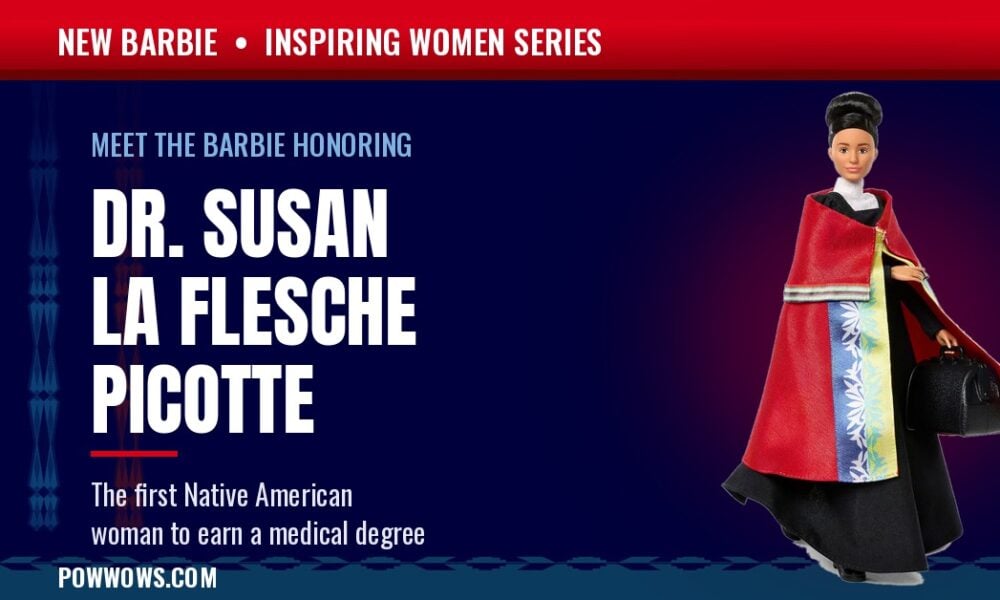
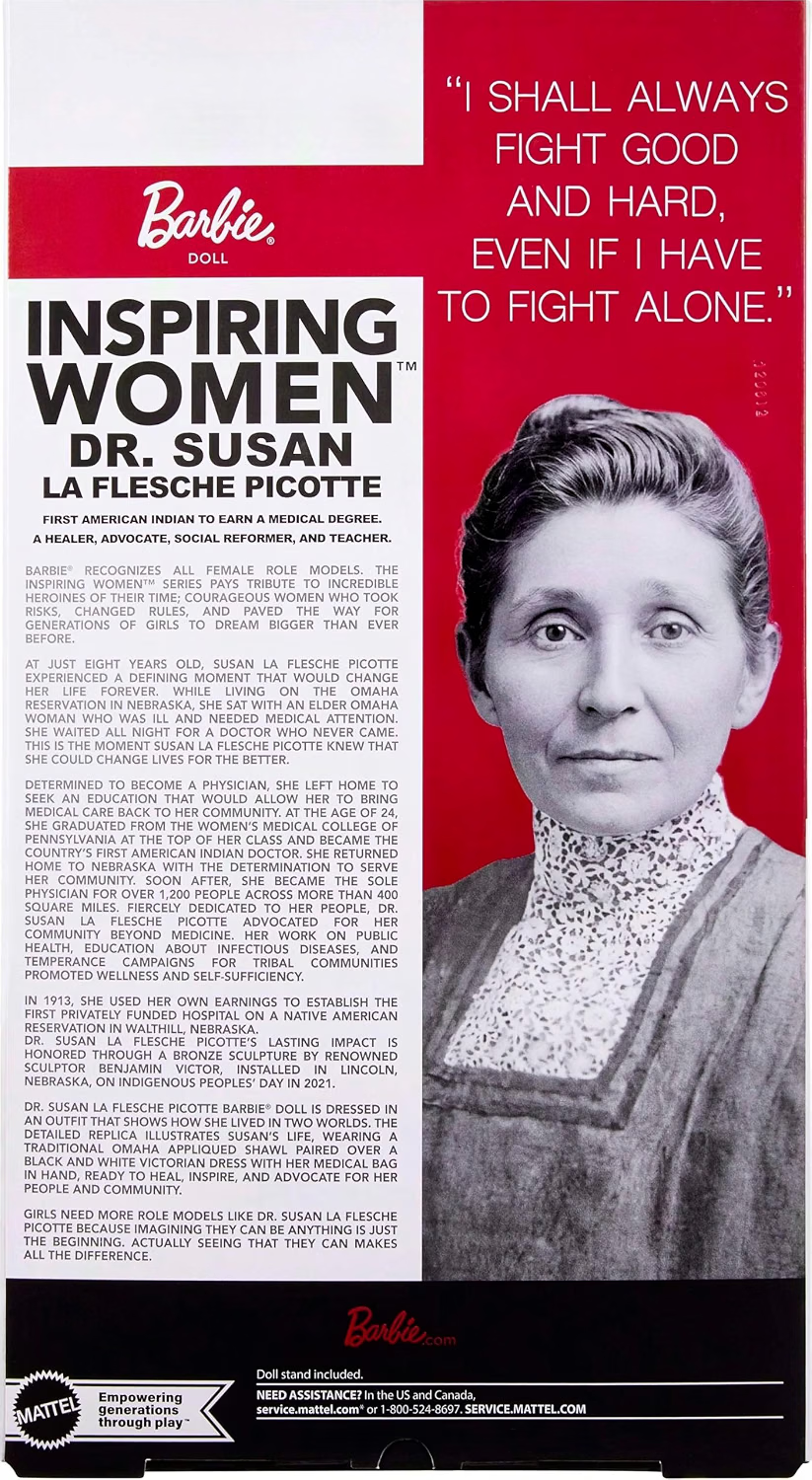
Mattel just released a Barbie honoring Dr. Susan La Flesche Picotte, an Omaha woman who became the first Native American to earn a medical degree — back in 1889. It’s part of the Barbie Signature Inspiring Women collection, and it’s one of the coolest things I’ve seen come out of the toy aisle in a long time.
When my daughter was growing up, the dolls on the shelf were princesses and fashion. Nothing wrong with that. But a doll that hands a young girl a real story — a Native woman who became a doctor when almost nobody believed she could — that’s a different kind of toy. That’s a conversation starter.
Who Was Dr. Susan La Flesche Picotte?
Susan La Flesche was born on June 17, 1865, on the Omaha Reservation in Nebraska. When she was just eight years old, she sat with an elderly Omaha woman who was sick and needed a doctor. They waited all night. The doctor never came, and the woman died.
Think about that for a second. An eight-year-old girl decided right then that she was going to be the one who showed up.
And she did. She left home for school, went on to the Woman’s Medical College of Pennsylvania, and graduated at the top of her class in 1889 — at 24 years old. Then she went straight back home to serve her people.
Dr. Picotte by the Numbers
- 1865 – Born on the Omaha Reservation in Nebraska
- 1889 – Graduated top of her class, becoming the first Native American to earn a medical degree
- 1,200+ – People she cared for as the sole physician on the reservation
- 400+ square miles – The territory she covered for her community
- 1913 – Opened the first privately funded hospital on a reservation, in Walthill, Nebraska, using her own earnings
- 1915 – Passed away at age 50, after a lifetime of service
She didn’t stop at medicine, either. She fought for public health, taught families about preventing diseases like tuberculosis (which hit Native communities especially hard), and advocated for her community’s rights. Healer, teacher, advocate, reformer — she was all of it.
“I shall always fight good and hard, even if I have to fight alone.”
— Dr. Susan La Flesche Picotte
That quote is printed right on the back of the box. I love that a little girl is going to read that.
What the Doll Looks Like
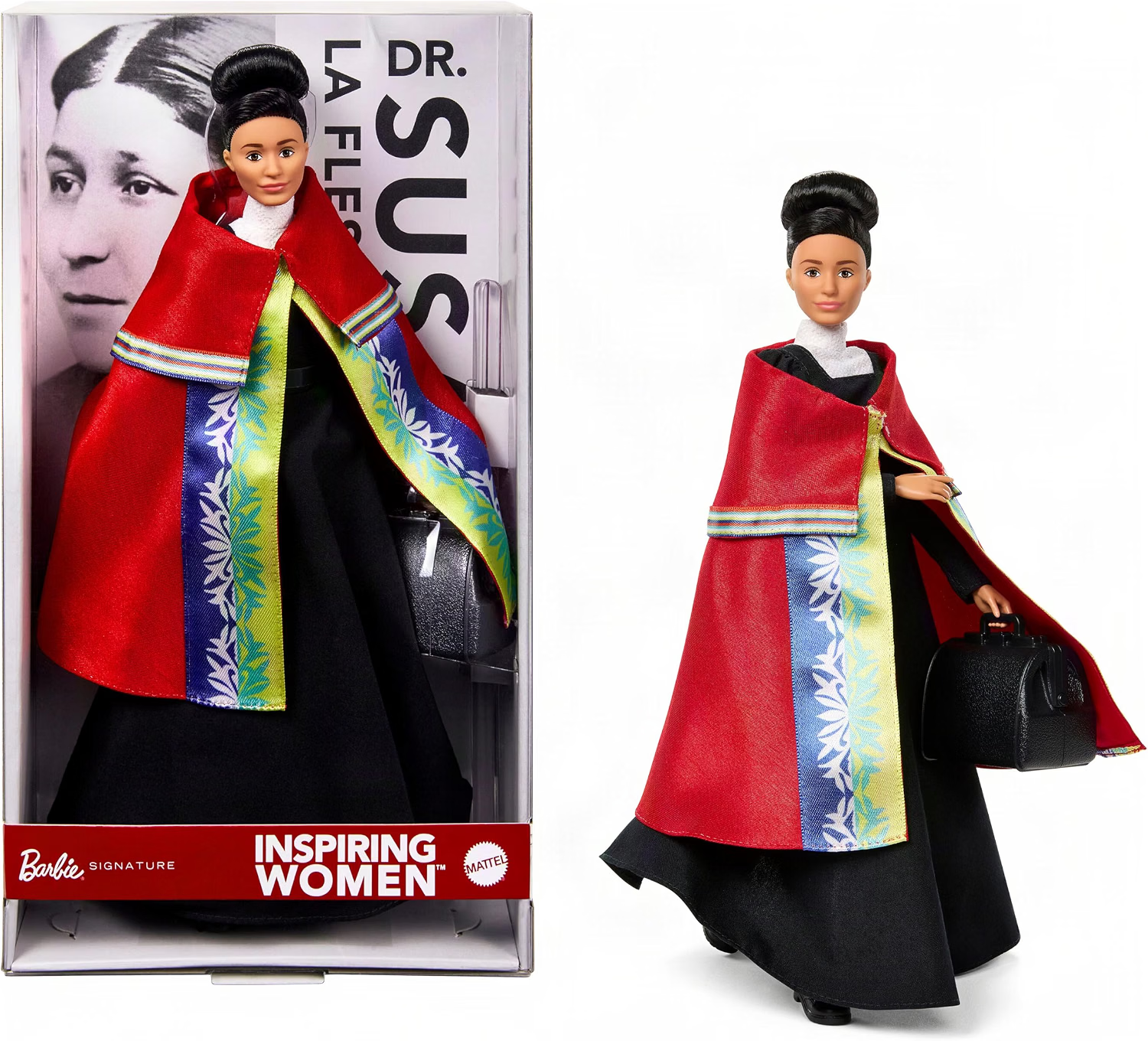
Mattel didn’t just slap a name on a box. They worked with Dr. Picotte’s great-granddaughter — a nurse who is also named Susan Picotte — and the Picotte Center to get the details right.
- The shawl: A red traditional Omaha (Umonhon) appliquéd shawl with ribbonwork-style panels
- The dress: A black-and-white Victorian-era gown, true to how she dressed in the late 1800s
- The medical bag: Because this Barbie is ready to make house calls
- Doll stand included — great if you’re displaying it on a shelf
The look is based on the bronze sculpture of Dr. Picotte by Benjamin Victor that was installed in Lincoln, Nebraska, on Indigenous Peoples’ Day in 2021. The outfit is meant to show how she lived in two worlds — proud of her Omaha culture while working in Western medicine.
The doll was unveiled on November 9 at an event hosted by the Picotte Center at the Umonhon Nation Public School in Macy, Nebraska. Her great-granddaughter put it best: “She was a role model for the women in our family.” Now she gets to be a role model for a whole lot more families.
🎥 Watch: The Story Behind the Doll
◆ YOU FOUND A BONUS CODE! ◆
2026 Explore Native Challenge
3146736
Enter this code on the giveaway page for extra chances to win Native-designed prizes from Eighth Generation.
Why I’d Put This in Every Young Girl’s Hands
As a dad, I wanted my daughter to grow up believing she could do anything. But it’s one thing to tell a kid that. It’s another thing to show her a real woman who actually did it — against every odd you can imagine.
Here’s what a doll like this teaches without ever feeling like homework:
- 💪 Women power is real. A Native woman became a doctor in the 1880s, when women — and especially Native women — were shut out of almost everything.
- ❤️ Purpose comes from caring for others. She saw a need in her community and spent her life filling it.
- 🪶 You don’t have to give up who you are. She stayed proud of her Omaha identity while succeeding in a world that wanted her to leave it behind.
- 📚 Native history is American history. Most of us never heard her name in school. Our kids can.
Barbie says it right on the box: girls need to see role models, not just imagine them. I couldn’t agree more.
🎁 A Gift That Means Something
November is Native American Heritage Month and the holidays are right around the corner. If you’ve got a daughter, granddaughter, niece, or a future doctor in your life, this is the one.
These collector dolls tend to sell out — grab one while you can.
Barbie Is Giving Back, Too
Along with the doll, Mattel’s Barbie Dream Gap Project is donating to AISES (Advancing Indigenous Science and Engineering Society) to support its AUNTIE Tech Collective — a program that has directly served 180 Native girls and reached more than 250,000 girls and families. So the story doesn’t just sit on a shelf; it’s helping the next generation of Native girls get into science and tech.
Dr. Picotte also joins another Native trailblazer in the Inspiring Women series: Maria Tallchief of the Osage Nation, America’s first major prima ballerina.
Keep Reading: More Powerful Native Women
If Dr. Picotte’s story got you fired up, here are a few more from our archives you and your kids will love:
- 👉 20 Native American Women You Should Know — Wilma Mankiller, Sarah Winnemucca, and more
- 👉 Native American Women Leaders
- 👉 The Role of Women in Traditional Native American Societies
And if you want to see Native culture alive and thriving in person, take the family to a pow wow — find one near you on our Pow Wow Calendar.
Sources: Native News Online, NBC Palm Springs