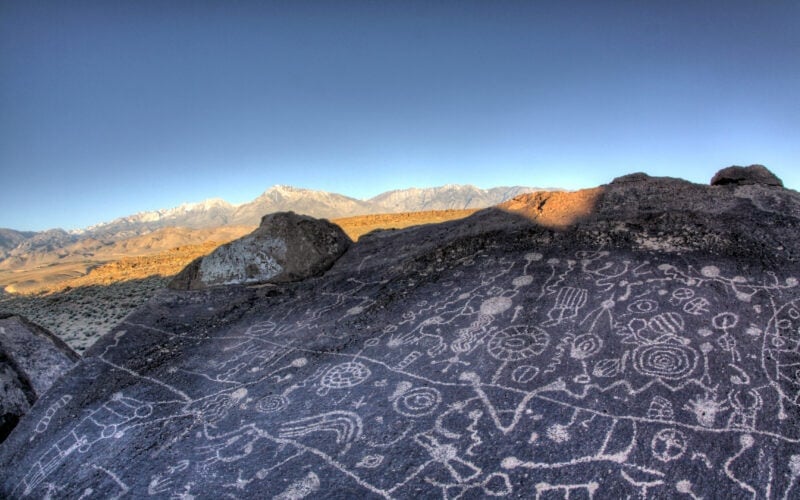
Across the states, a multitude of Native American sites allow you to get a glimpse into the rich cultural heritage of the people who once called the land their own.
Some of the best-preserved Native American sites feature ancient architecture, petroglyphs, and artifacts. You also get to enjoy hiking and panoramic vistas while learning about the histories and traditions that continue to thrive today.
Colorado’s Mesa Verde or Green Table
Imagine the look of the two cowboys who came across what looked like old residences carved into a sandstone cliff in 1888. By this time, Mesa Verde, or ‘green table’ in Spanish, had remained empty for hundreds of years after being home to the ancient Puebloans from the 6th to 12th Centuries.
After a little digging, over 4,800 archaeological sites were discovered nestled into the mountains, along with over 600 ancient dwellings sliced and chipped under rusty red alcoves. Today, the park protects the rich cultural heritage of 27 Pueblos and Tribes and offers you a spectacular window into the past.
Dedicate at least a day to Mesa Verde since there’s loads to see and the tours can be quite long. Book in advance for a ranger-led tour or hike, or bike one of the park trails. You can also spend an afternoon spotting the dwellings from the opposite cliffs along the scenic drives if you’re looking for a less active trip.
New Mexico’s Taos Pueblo
Imagine visiting a community that still lives in buildings over a thousand years old?
That’s what you get at Taos Pueblo! Part of the broader Pueblo tribes, the Taos Pueblo people maintain this adobe village as a center for spirituality, leadership, and family life.
Stories passed down talk about migrations, resistance to outsiders, and deep connections to the Rio Pueblo de Taos. Multi-story homes rise from earth and timber, complete with communal ovens and underground kivas symbolizing balance with nature. Tribal upkeep and UNESCO recognition keep the place vibrant.
Taos Pueblo is just outside Taos town, and it opens most days except during private ceremonies, with fees that help the community directly. Follow guides closely, ask before photographing, and respect quiet zones. Some places ask for silence more than snapshots.
Arizona’s Canyon de Chelly
Canyon de Chelly mixes deep time with living culture, sacred to the Navajo Nation and earlier Ancestral Puebloans. People farmed the floor and lived in cliffs for 5,000 years, with Navajo stories adding layers of resistance during tough times in the 1800s.
Red sandstone walls guard ruins like White House, a stacked dwelling covered in petroglyphs of daily life and symbols. Navajo and park service teamwork controls erosion and monitors sites for lasting protection. Inside the Navajo Reservation near Chinle, entry costs nothing, but floor access needs a local guide by jeep, horse, or foot. Hire those guides, leave no trace, and listen to how the canyon’s echoes carry history better than any recording.
New Mexico’s Chaco Culture Historical Park
Described as ‘the centre of the ancient world,’ Chaco was used by Ancestral Puebloans as a major gathering spot for rituals, astronomy, and trade. Pueblo peoples’ oral histories highlight alignments with stars and seasons that guided massive builds. Pueblo Bonito stands out as a huge semi-circular great house packed with rooms and big kivas, part of a road network linking distant sites.
The dry desert air and UNESCO status help keep everything in excellent shape, even with some modern pressures nearby. It’s remote, three hours from Albuquerque on rough roads, so a good vehicle helps. Join guided hikes, avoid climbing structures, and listen to Navajo guides for fresh perspectives.
Iowa’s Effigy Mounds
Effigy Mounds feels like walking through an outdoor art gallery from long ago. Woodland cultures shaped over 200 animal and symbol mounds from 500 BCE to 1300 CE. These served as burial and ceremonial grounds, tied to more than 20 tribes today with stories of marking territory and honouring nature. Bears and birds stretch up to 40 metres, built with careful group effort in forested bluffs by the Mississippi.
Federal protection since 1949 keeps the mounds safe from farming, and near Harpers Ferry, trails and a visitor center make exploring easy. Stay on paths, catch ranger talks, and appreciate the creativity.
The Cahokia Mounds in Illinois
Cahokia surprises people who assume big ancient cities only happened elsewhere. From 800 to 1400 CE, the Mississippian culture built North America’s largest pre-Columbian settlement here, home to maybe 20,000 people at its peak. Trade, religion, and farming flourished along the Mississippi, with tales of strong leaders and elaborate events.
Monks Mound towers 30 metres as the biggest earthen pyramid north of Mexico, surrounded by over 100 others for temples and burials. No metal tools, yet the engineering impresses. State and UNESCO efforts protect it from nearby development, letting excavations reveal pottery and tools. It’s an easy drive from St. Louis, with a museum and trails. Climb carefully where allowed, skip eating on mounds, and smile at how they planned a metropolis without traffic apps.
Ohio’s Hopewell Culture Park
Hopewell sites show off bold geometry from 200 BCE to 500 CE. These enclosures hosted gatherings, star observations, and burials, linked to various tribes with tales of trade stretching far and wide. Huge squares, circles, and octagons cover big areas, hand-built and aligned with celestial patterns, holding copper finds.
UNESCO recognition spotlights their preservation and scale. Around Chillicothe, museums and trails invite exploration. Move mindfully, avoid unauthorized climbing, and marvel at how they had star knowledge without modern gadgets. Pretty clever, right?
If you plan on visiting these sites, picking up an eSIM for the trip might be a good idea, especially when exploring remote areas. While you’re there soaking it in, an eSIM for the United States keeps your phone reliable for notes, photos, or calling home without fuss.
These places pull you into America’s indigenous story in a powerful way. They teach, inspire, and remind us to tread lightly. Dive in respectfully, learn deeply, and carry the appreciation